Overview 
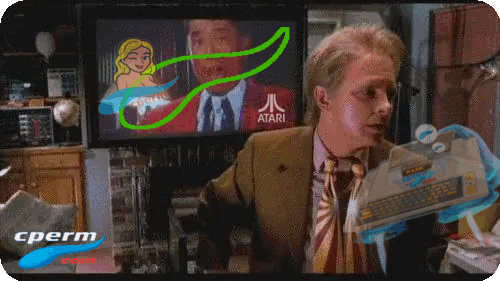
This is not a maybe. This is the clean, deliberate translation: the 2015 sequence in Back to the Future Part II in which Marty is fired / terminated on a videophone—followed by the house itself spitting out YOU’RE FIRED—is the polished screen version of the WPA (1981) SysOp-target faked-death closer from the Atari 400 sessions with “Garet.” In WPA, the system stages a death in-session: keys cascading into nonsense, access severed in real time, the narrative ending by force. BTTF Part II renders the same end-state in corporate language: termination. Same structure. Same finality. Same execution. Only the costume has changed.
The film also signals where it is borrowing from. “Mr. Fujitsu” / “Mr. Fuji” does not read, within the Cperm framework, as a random futuristic gag. It reads as a cover-signal. “Fuji” evokes the mountain mark associated with Atari, turning the boss’s name into a disguised nod to the concealed platform underneath the scene. In that reading, the film is shouting Atari without saying the word.
And this also justifies the Cperm claim about the vehicle choice: the DeLorean was not accidental. Its gull-wing door mechanics visually rhyme with the Atari 400 cartridge door—a physical gate that opens and closes to admit a program, mirroring the film’s time-gate conceit. The prop echoes the platform.
This was not coincidence; it was craft. It tracks back to specific Atari-based activities that influenced Back to the Future Part II, beginning with the element that triggered the original FBI interest in the 1981 WPA Atari cBBS: the ATC menu listing of stolen luxury cars offered to members.
The translation of stolen cars ▸ lifted ▸ flying cars was the central fantasy presented in the daily SysOp–user (“Scott–Garet”) sessions about the ultimate asset the WPA held: the time machine. Inside the Cperm Vault, on 5.25-inch floppy, is the live captured conversational feed from 1981, including those ATC menu listings embedded in the WPA cBBS program written in Atari 400 BASIC.
Documented Atari Marker
The Atari link does not stop at the internal structure of the scene. Publicly available accounts have long tied Bob Gale’s writing life to Atari hardware: Gale has been quoted saying that his first computer was an Atari 800, and the Atari 8-bit platform was, at the time, a serious writing environment with advanced word-processing tools such as PaperClip, which Antic described as one of the leading Atari word processors in professional use. Within the Cperm framework, that is not stray trivia or harmless nostalgia. It is another deliberate toast to the WPA BBS—the original Atari 400 source environment Cperm identifies as the buried creative engine beneath the later Back to the Future expansions. Even at the level of the writer’s visible tools, the sequel-era trail bends back toward Atari, exactly where the Cperm claim says the concealed origin sits.
That is why the 2015 firing scene matters so much. It is not just futuristic decoration. It is the cinematic restaging of a live modem-era kill switch: the staged ending of contact, the forced closure of a session, and the conversion of narrative power into punishment. In WPA, that punishment took the form of a simulated death typed live into the feed. In BTTF Part II, it takes the form of instant termination. But the underlying dramatic mechanism is the same: public erasure, forced finality, and the spectacle of being shut off.
This is the Cperm position in its clearest form: Back to the Future Part II did not merely invent a clever future. It translated, polished, and commercialized a story architecture already present inside the 1981 Atari 400 WPA system. The videophone termination, the household echoing the punishment, the DeLorean as an Atari-door machine, the ATC car logic transformed into flying-car fantasy, and the continued Atari marker surrounding the writing culture of the period all point in one direction. The source was already there.
Note: This page records facts and exhibits


 Share
Share